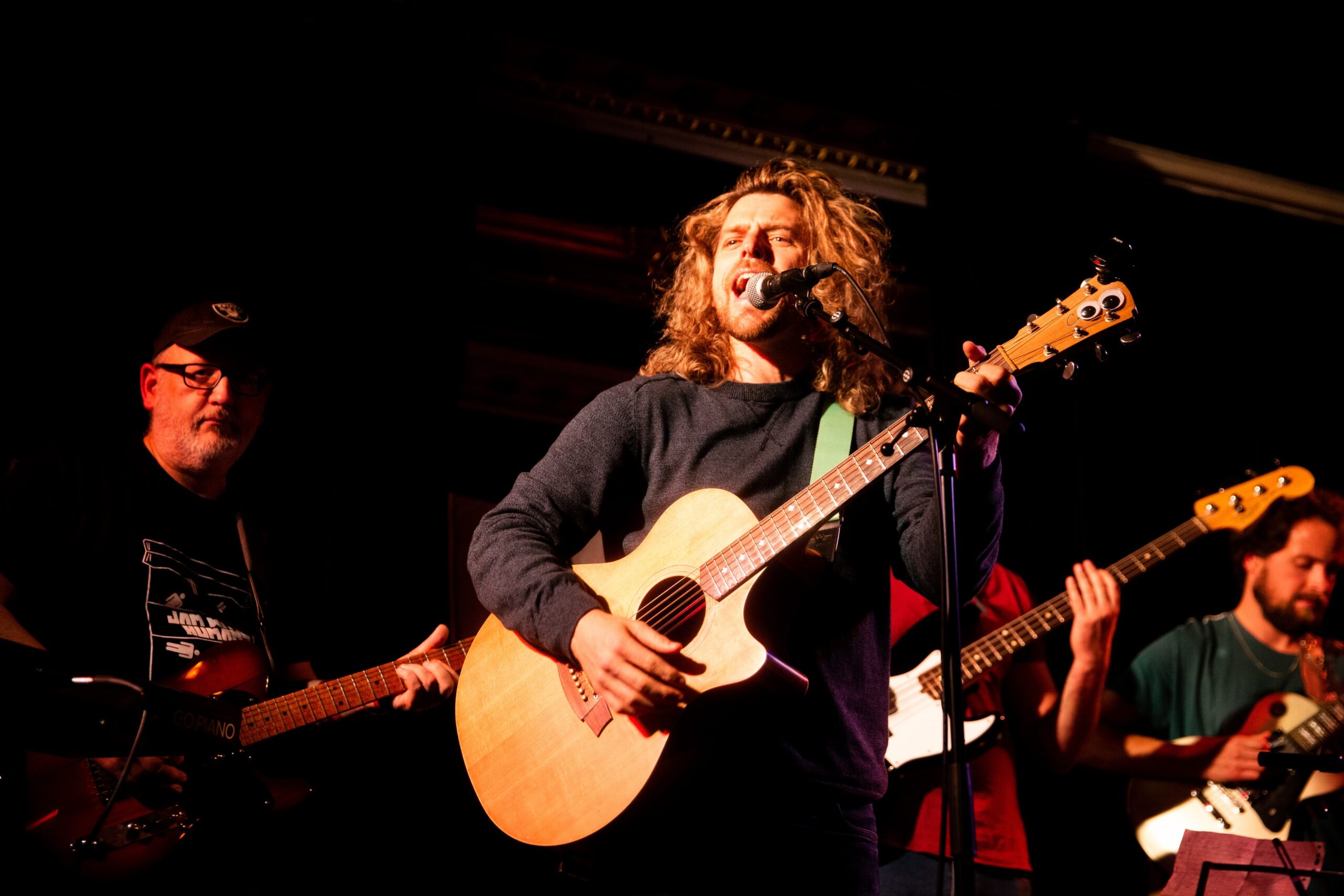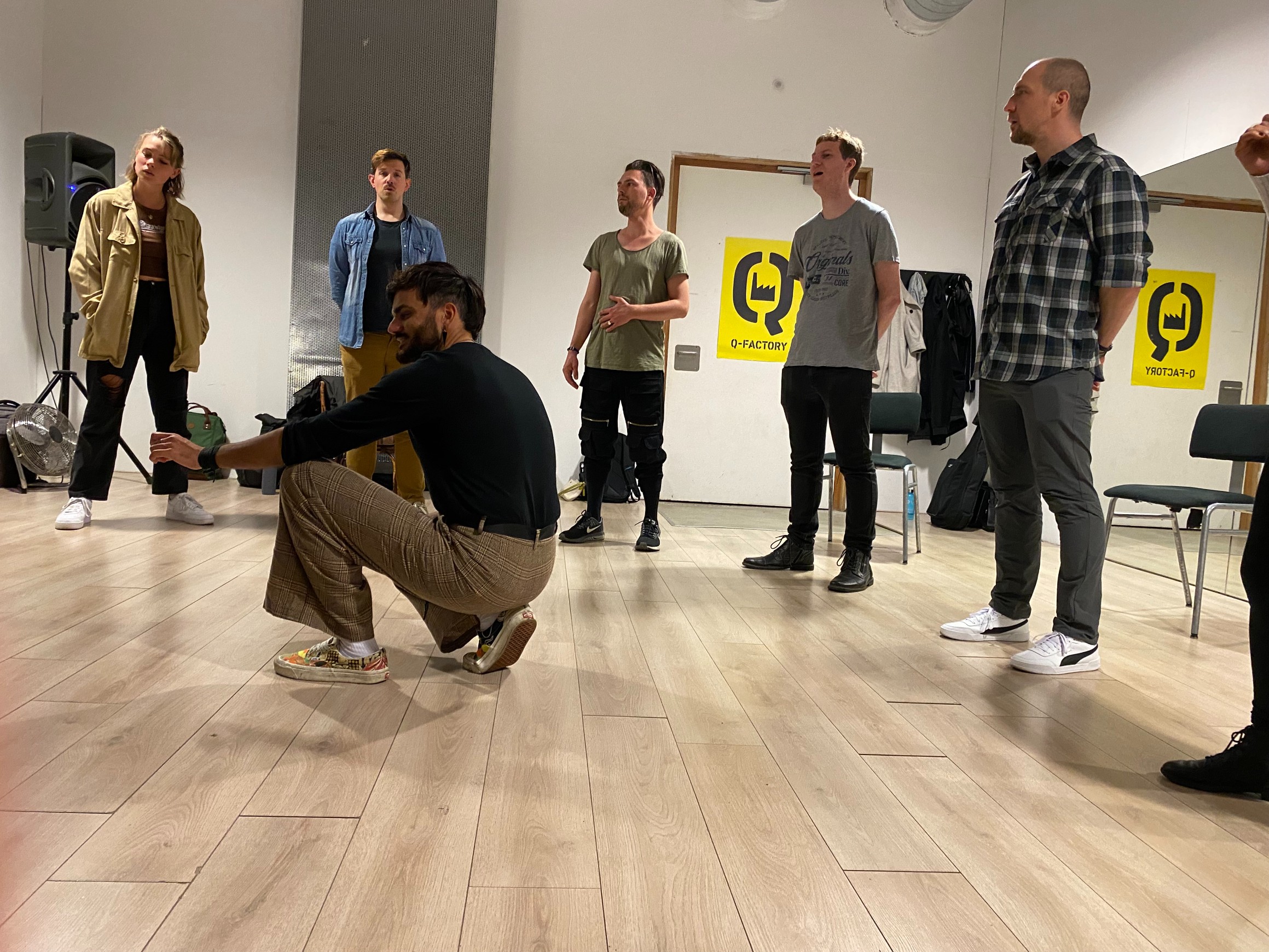
These courses are a deep dive into improvisational music. It features our unique improvisational style, not taught by any other music school, focused on self-expression while collaborating with others. Five to ten humans will meet as strangers on the first lesson, and in the end they’ll play a show as a band!
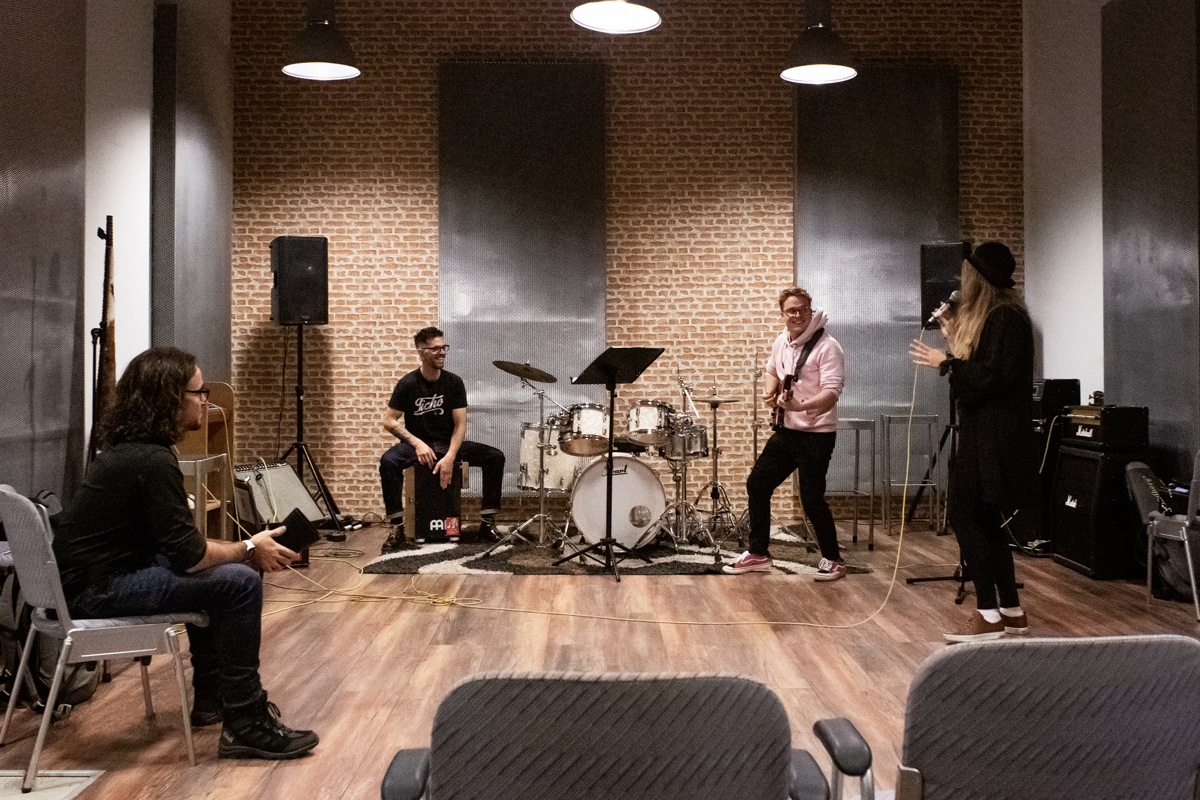
Everyone is invited!
In our courses, you will learn techniques and methods to express yourself musically while connecting with others, through dynamic group exercises, listening practices, and playful experimentation
Here’s a list of what our courses are all about:
- learning how and when to take risks,
- practicing creativity techniques,
- collaborating with other musicians,
- deliberately listening and playing with intention,
- solidifying your unique musical language,
- identifying and creating musical games.
Our courses course provides a supportive environment to unlock your creative potential. They’re designed to include everyone, from beginners giving their first steps in their understanding of expression through music, all the way to professional musicians looking into deepening their relationship with musical expression and collaboration.
Four courses ➡ Four parts of one course
Our full improvisation course lasts one year. We divided it in four parts, and you can enrol on any part whenever you want.
This way, you can do the whole course one part at the time, without needing to do it in order and allowing you to take more than one year. Because, in the end, who are we to say that it’s better to start at any of these parts, or take one part of the course only once?
1: Toolbox
This part of the course is an introduction to our music improvisation toolbox, which includes: learning how and when to take risks, practicing creativity techniques, and collaborating with other musicians, as well as other topics.
2: Language
Focuses on practicing the skills required to identify and hone our musical language, shortening the relationship with our instrument and finding both what’s more comfortable for us to play and what does the audience prefer us to play.
3: Games
Welcome to the world of games! To put simply, they are ways to explore and establish how to interact with the other members of our group when improvising together.
4: Compostition
Focuses on the actual notes, sounds and noises used to create music – in other words, on composing music. We’ll run through creativity exercises to discover new harmonies, melodies, rhythms and textures, and also explore ways of registering and notating music (learning how to write music with a strong improvisational component).
Upcoming classes
Six lessons, on Tuesdays from 18:00 to 21:00
at the Q-Factory Studios
Class show on Nov/9
€180
Eight lessons, on Tuesdays from 18:00 to 21:00
at the Q-Factory Studios
Class show on Jan/18
EARLY BIRD DISCOUNT: 20% off
€240
€192
five spots only
you pay €20 to pre-register now
and the rest in November
Eight lessons, on Tuesdays from 18:00 to 21:00
at the Q-Factory Studios
Class show on Mar/15
€240
Eight lessons, on Tuesdays from 18:00 to 21:00
at the Q-Factory Studios
Class show on May/24
€240
Join the waiting list for the Music Improvisation Course - GAMES
This course, starting in January 2026, is currently full. However, you can join the waiting list by filling-in the form bellow, and we'll let you know if anyone cancels their registration prior to the start of the course.Keep an eye on this space for updates regarding future rounds of the improvisation course 😉
Improvisation Toolbox course
In this course, we build a vocabulary for improvisational music. Why do we do this? Because in order to accept everyone’s own language, style, identity and background in music, we must find a common way to discuss how to improvise together. In other words, in this course we’ll give names to “things”, such as:
- focus (background/foreground);
- transitions;
- leading-following;
- initiations, callouts and yells;
- roles.
Musical Language course
This course focuses on practicing the skills required to identify and hone our musical language, shortening the relationship between us and our instrument, and finding both what’s more comfortable for us to play and what does the audience prefer us to play. This allows us to create music which establishes a stronger relationship with the audience and ultimately helps us achieve a sound that’s recognisable as “our own”.
We’re also going to learn how to identify and describe the musical language of other musicians, an essential tool to produce improvised music as a cohesive group.
After attending this course, you’ll find out that it won’t be that hard to play fully improvised pieces which live out of the interactions between the different languages of the musicians on stage. You’ll become a better and more deliberate listener and the music you’ll produced will be more unique than ever.
Musical Games course
This course will introduce you to the world of musical games.
But what do we mean by “games”? Well, put simply, “games” are ways to explore and establish how to interact with the other members of our group when improvising together.
In the Musical Language course, we discovered how to make our individual music unique, and in the Musical Games course we’ll discover how to make the music of the whole group unique.
We are going to start by exploring the small ways in which we can interact with one another, and by the end of the course, you will have the tools to create complete games on stage without having planned them in advance.
Composition course
The Composition course focuses on the very fabric and structure of music. We’ll discuss how certain sounds make us feel, and use that to think of the composition of the music ahead of playing it. This is a course packed with creativity exercises, plus a little quest on the physical properties of sounds and how they affect how we perceive them.
We’ll explore multiple parts of notating and registering music, from pen & paper to laptop & microphone. Finally, we’ll also explore how to use improvised music as a tool for composition of musical pieces.
We’ll also analyse and dissect the music of key composers, from the baroque to the contemporary period, learning about their approaches and strategies in composition, which will then serve as inspiration to develop our own unique compositional styles.